Are your shelves overflowing? Are those parts overstock, or just old? When was the last time anyone ran a report on your loose parts inventory?
I recently ran one for a yard that turned up 53 parts worth $1,800 from vehicles more than 1,000 days old. That’s nearly three years on the shelf. For most recyclers, $1,800 is another vehicle at auction, fees included. For others, I’ve found parts that had been sitting for 3,650 days. Ten years. The reaction was quieter than I expected, almost as if it wasn’t a problem.
It is a problem. I’ve visited hundreds of yards, and in my experience almost every recycler is overstocked. It’s only a matter of degree. No one wants to use the word, but some of us have a hoarding problem.
Who’s paying the rent?
I often tell the story of the landlord who complains that his tenants aren’t paying rent. Technically he’s right. But if the tenants aren’t paying, who is? The landlord. The mortgage, taxes, and utilities don’t go away.
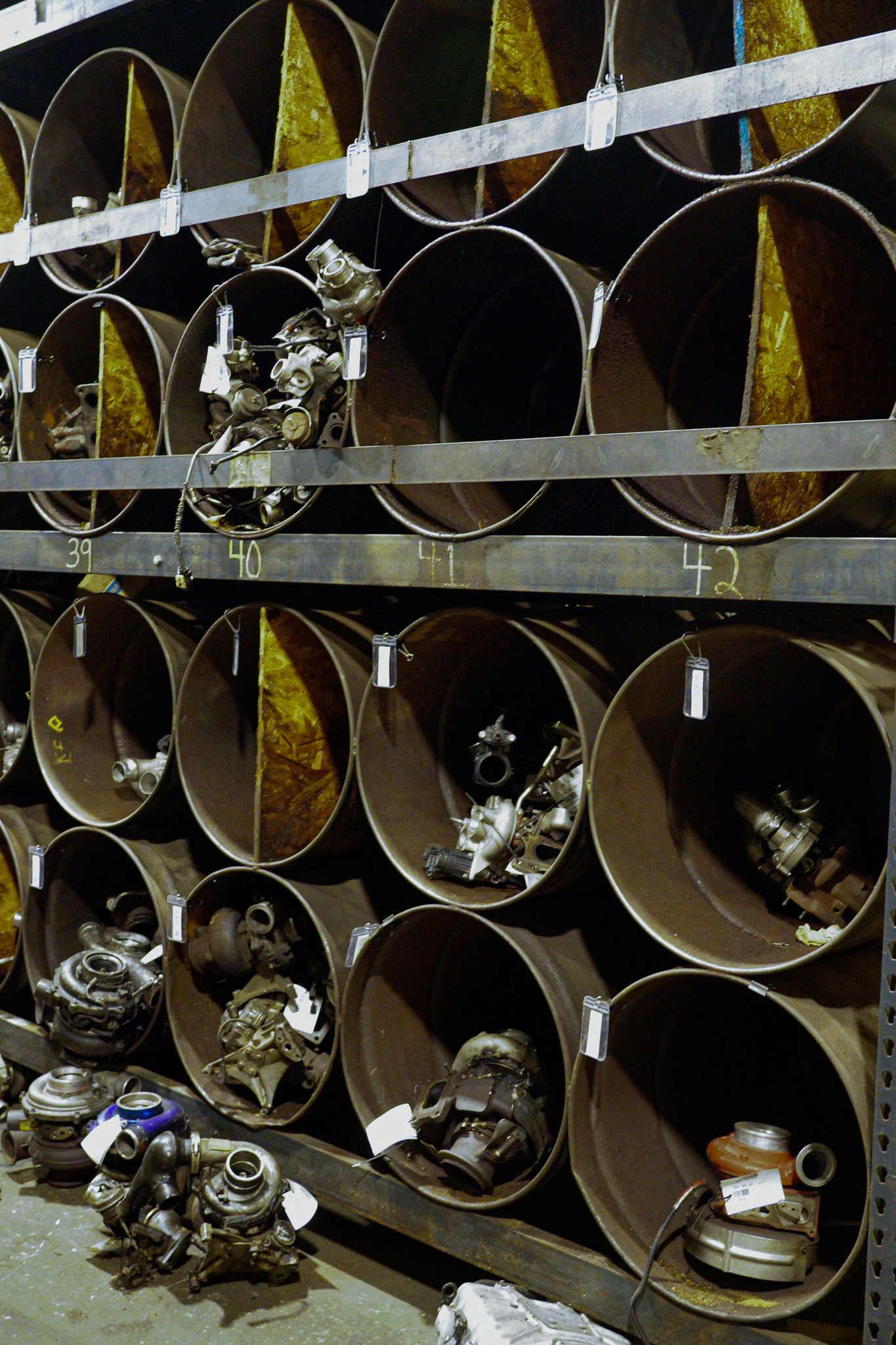
Your shelves work the same way. Every part costs you rent: the space it occupies, the labor that pulled and stored it, and the money tied up in it. The longer it sits, especially when your system says nobody is asking for it or you already have three more, the more it costs you.
The hidden costs of a crowded shelf
Parts go missing
Here’s how a missing part plays out. Someone takes the pick ticket to the rack and finds an ocean of parts. They move parts off the shelf to look behind and underneath. When the part still isn’t there, they go back to the office and pull in a second person: a supervisor, a manager, maybe the owner. In my experience, the odds of finding it at that point are about 50/50.
Now do the math. If that happens just three times a week, that’s 156 missing parts a year. At a $75 average ticket, that’s $11,700 in lost sales, before counting the time and labor of everyone who went looking. And don’t forget the 156 customers who were left waiting or told you don’t have it after all.
Parts fail on the shelf
Auto parts like to be in motion. When they sit through seasons of heat and cold, gaskets and seals dry out. Install that part and ask it to perform at 100%, and you get a return. Keep that in mind when your report shows A/C compressors, calipers, motors, and transmissions that have been on the shelf for three years or more.
People get hurt
I’ve visited yards with so much inventory that parts were stored on the floor in the aisles. Now you’re paying employees to climb over your newest parts to reach your oldest ones. Engines and transmissions stored between racks mean someone is manhandling heavy parts in a tight space. That’s a safety record waiting to happen.
Don’t get emotional
My father-in-law, Arthur Murphy, had a way of summing up complicated problems in a few words. When it came to inventory, his advice was simple: don’t get emotional.
When I was new to the industry, I watched owners stash vehicles they meant to restore someday, tying up valuable space. I watched them turn down a fair offer on a part because they couldn’t stand to discount it, preferring to put it back on the shelf and keep paying its rent. Some owners won’t core out a part that’s been sitting ten years because the core price feels too low.
Moving to a new house forces you to make these decisions, whether it’s a family portrait or an A/C compressor that’s been on the shelf for a decade. Make them based on data, not attachment. Fruit that stays on the vine too long goes bad.
How to find your dead stock
Run an inventory report at least twice a year. Your yard management system already tracks what you need:
- Days on hand (DOH). How long has it been sitting?
- Quantity on hand (QOH). How many of the same part do you have?
- Requests and sales. Is anyone still asking for it?
- Location and price. Where is it, and what’s it worth to you on the shelf versus as a core?
Anything that’s old, duplicated, and not being requested is a candidate to core out or scrap. Pulling these doesn’t have to hurt your in-stock selling stats if you keep the copies that actually sell.
And remember: some parts have little core value because there’s no demand for them. But many have a reasonable return that justifies turning them into cash. When you’re buying vehicles, cash is still king.
Stop it at the source
The best time to prevent overstock is in the dismantling bay. When a vehicle comes in for an engine or transmission sale, your system already tells you QOH and DOH for every other part on it. If you already have duplicates or triplicates of a small part on the shelf, that one goes in the core box, not on the rack. It’s the one point in your process where you can trim overstock before it ever reaches a shelf.
Read more: Cores Are a Contact Sport: Five Contact Points for Cores in Your Workflow
Give someone the authority
Sometimes owners are the worst people to core out old inventory. We’re too close to it. Your inventory person should have both the authority and the responsibility to manage and purge old and overstocked parts, not just enter new ones.
Every organized business has someone who can’t stand clutter. Find your organizer, give them the reports, and let them clear the shelves.
We make money on the turn
Back in the 1930s, selling a part off a car that had been on the lot for ten years was something to celebrate. Today, I’d have a heart attack. Vehicle costs and expenses are far higher, and most of us are trying to break even on a vehicle in 90 days. We make money on the turn, not in an endurance contest to see how long we can keep a part.
Stop choking on your inventory. Run the report, make the call, and turn dead stock into cash for your next vehicle.
Back to the full guide: Auto Core Competency
Not sure what’s sitting on your shelves? Ask the RAS cores team about an inventory review.