I was driving a country road in the southwest corner of Tennessee not long ago. Bends, small hills, nobody around. I was tempted to put the pedal to the metal. But I didn’t know the territory, and I had a feeling a small-town officer was waiting around the next curve for an out-of-towner. Fast or steady, I’d get where I was going. Fast just came with more risk.
Somewhere on that road, Aesop’s fable of the hare and the tortoise came to mind. It’s a pretty good lesson for auto recyclers when it comes to converters and cores.
The hare: converters and scrap
Some recyclers hesitate to commit to a regular core program but get excited chasing catalytic converters. I understand why. When precious metal prices are high, converters are a boon. But their value is a roller coaster. Converter prices ride the markets for platinum, palladium, and rhodium, and over my career I’ve watched them climb and then drop like a lead balloon. Scrap prices for hulks have swung just as hard.
There’s a place for converters in every recycling business. The problem is building your plans around them. You can’t budget volatility.
The tortoise: cores
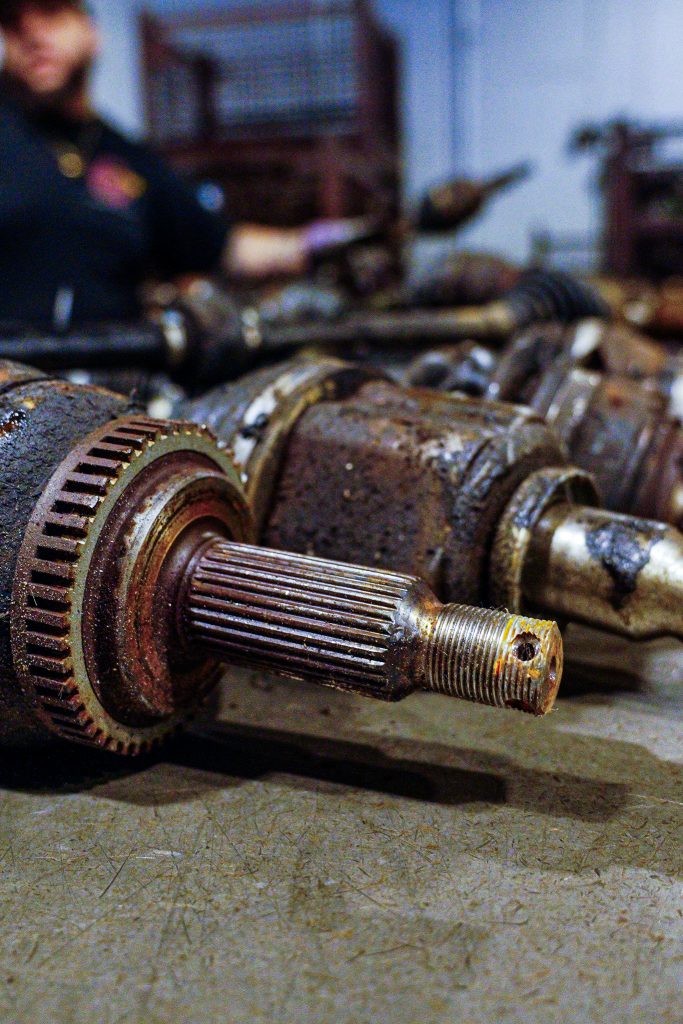
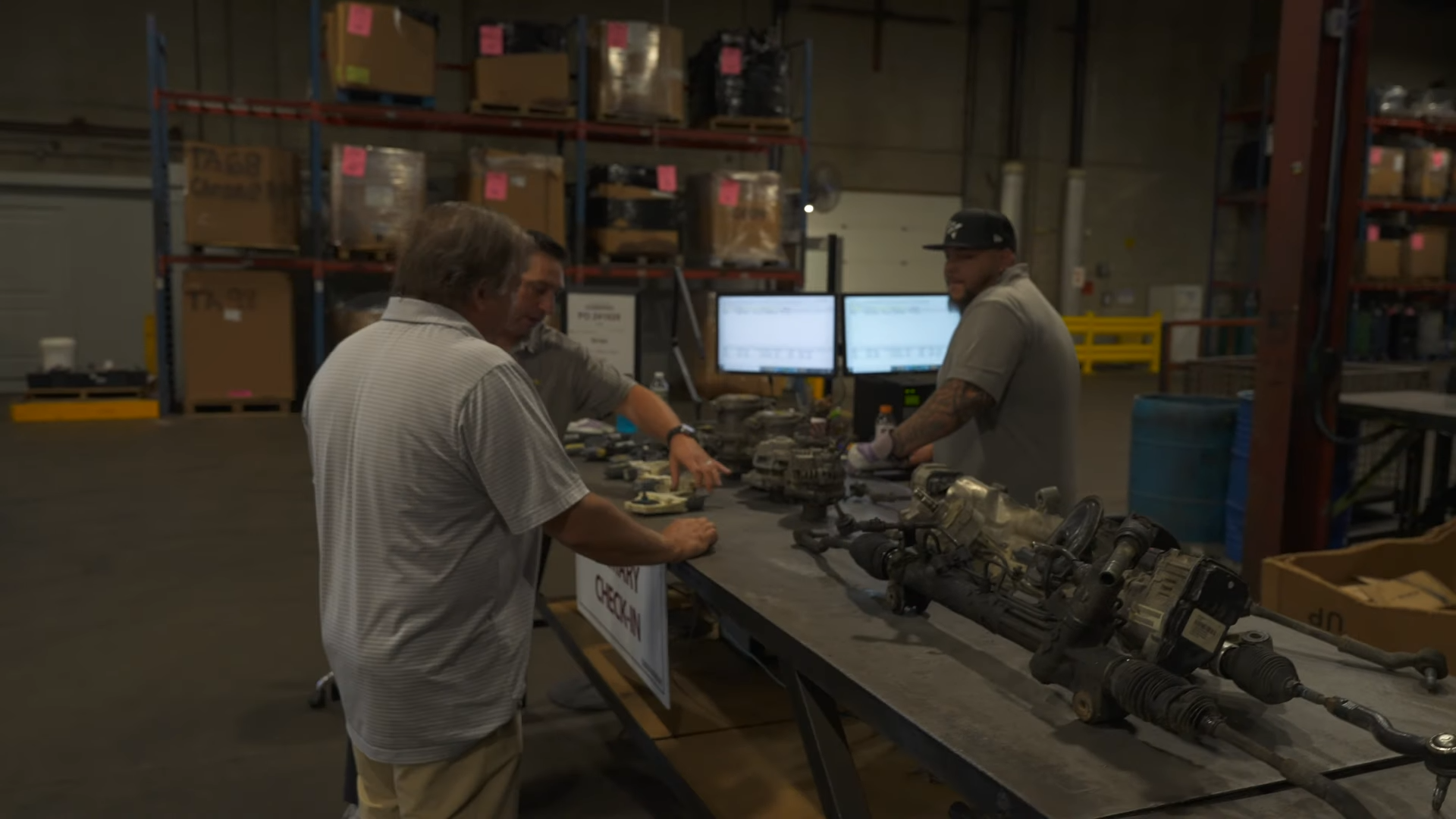
Cores are the tortoise. In my experience, they’re one of the most consistent by-products we produce in both price and demand. They may not have the highest yield of any commodity, but done right, with your people dialed in, they deliver a steady stream of revenue month after month, year after year.
And technically, a catalytic converter is a core too. The question isn’t which one to chase. It’s whether you’re managing all of them as one program.
Think in terms of a partfolio
I like to twist the word portfolio into partfolio. We invest in vehicles for their parts. But the parts that sell are only one part of the return. The rest is in the partfolio of non-parts revenue: cores, converters, commodities, and recalls.
| Partfolio item | Examples | Behaves like |
|---|---|---|
| Large cores | Engines, transmissions, transfer cases | Bonds: steady, predictable |
| Small cores | Steering, brakes, electronics, electrical, starters, alternators | Bonds and CDs: steady, predictable |
| Converters | Catalytic converters, O2 sensors | Growth stocks: high upside, high volatility |
| Commodities | Wire, aluminum wheels, scrap metal, hybrid batteries | Varies with the metals markets |
| Recalls | Takata recalled airbags | Program-based; also removes liability |
A good investor doesn’t put everything in growth stocks. Cores are the CDs and bonds of your partfolio. When the markets drop, they’re your hedge.
Measure the whole partfolio
Here’s my one piece of advice for owners and managers: you have to be able to measure it. Review your chart of accounts with your bookkeeper or accountant. Give each of these income streams its own line, then group them so you can see what percentage of your gross and net income they return. Once you see the total, you’ll know how much attention it deserves.
Read more: Reading Your Core Settlement Statement
If you handle converters, dust matters
Since converters are part of the same partfolio, a few words on protecting their value. I’ve seen a lot of mangled converters, and many of them were ripped off vehicles with forks to speed up removal. That breaks the can, cracks the brick inside, and turns a solid catalyst into fragments and dust. Dust ends up on the ground, and so does the value.
- Remove converters, don’t rip them off. Keep the can and the brick intact.
- Minimize drops. Every time a converter hits the ground, it loses material. A basket catcher keeps units off the ground and saves your team from bending over for every one. Repetitive bending leads to soft tissue injuries.
- Remove O2 sensors. Would you rather capture that value yourself, or leave it on the converter for someone else to make money on?
- Set up a breakdown table. A secure area where the day’s converters are reviewed, sensors removed, and extra pipe cut off.
Busy is not productive
Here’s the part of the fable that applies to owners. We work hard to keep our employees productive, but we rarely stop to assess our own productivity. Not how busy you are. How productive you are.
If you’re always running around putting out fires, you’re not operating at peak efficiency, and you’re not spending enough time teaching and delegating. A steady core program needs someone who owns it, with clear responsibilities, and an owner who lets them run it. That’s how the tortoise wins.
Slow and steady isn’t glamorous. But a core box that ships every month, at a predictable value, is revenue you can build a business on.
Back to the full guide: Auto Core Competency
Ready to build a steady core program? Talk to the RAS cores team.